Subscribe
Share
Share
Embed
Ducks Unlimited Podcast is a constant discussion of all things waterfowl; from in-depth hunting tips and tactics, to waterfowl biology, research, science, and habitat updates. The DU Podcast is the go-to resource for waterfowl hunters and conservationists. Ducks Unlimited is the world's leader in wetlands conservation.
Can we do a mic check, please? Everybody, welcome back to the Ducks Unlimited Podcast. I'm your host, doctor Mike Brasher. I'm your host, Katie Burke. I'm your host, doctor Jerad Henson. And I'm your host, Matt Harrison. Welcome to the Ducks Unlimited Podcast, the only podcast about all things waterfowl. From hunting insights to science based discussions about ducks, geese, and issues affecting waterfowl and wetlands conservation in North America. The DU Podcast, sponsored by Purina Pro Plan, the official performance dog food of Ducks Unlimited. Purina Pro Plan, always advancing. Also proudly sponsored by Bird Dog Whiskey and Cocktails. Whether you're winding down with your best friend or celebrating with your favorite crew, Bird Dog brings award winning flavor to every moment. Enjoy responsibly.
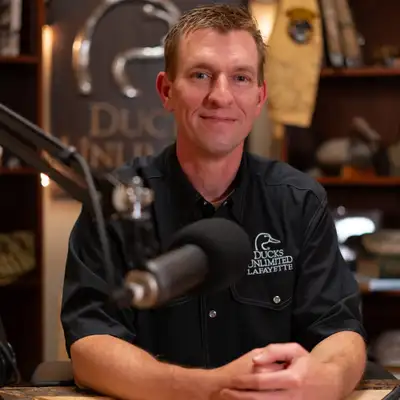
Mike Brasher:Hey, everyone. Welcome back. I am your host on this episode, doctor Mike Brasher, and this is installment number four in our trip around the Ducks Unlimited regions. I am thrilled to have joining us remote, Jamie Rader, our director of operations for the Great Lakes And Atlantic Region. Jamie, welcome back.
Jamie Rader:Hey, Mike. Good to see you today. Glad you saved the best for last.
Mike Brasher:Well, I knew you were gonna say that. Well, I knew one of us was gonna say that. It it doesn't surprise me that you would be the first one to bring it in there. So gotta stand up for for your region and and for all the great people that are doing the work there. So, yeah, we can say we saved the best for last.
Mike Brasher:So we do want to I I think we've had you on a few episodes before. Right? This isn't your first time.
Jamie Rader:I don't know. I've tried to avoid you pretty regularly, Mike, so this may be my first time.
Mike Brasher:In person and on the podcast. How about that?
Jamie Rader:Absolutely. Absolutely.
Mike Brasher:Well, it has been a while. I'm pretty confident of that if you were on previously. So give people a quick background on on who you are and and what you're doing there.
Jamie Rader:Yeah, Mike. I've been with Ducks Unlimited now for sixteen years. You know, interestingly, I've worked in every region for Ducks Unlimited. Started out as a intern in our WRE program in the South, moved on back up to work with doctor Scott Stevens on his nest dragging PhD project, which has been a a few moons, and then was fortunate enough to have Fritz Reed as my on my graduate committee when I did my work on endemic water birds under Lee Fredericksen in Hawaii, and then came back to Ducks Unlimited after finishing up grad school in the South Atlantic working near our Charleston field office, worked up through the ranks there, and then took over as director of operation here in Ann Arbor, Michigan in 2020.
Mike Brasher:I don't know that we've had you on the podcast because I would have remembered some of that. I like to think I would have anyway. The part about you working in Hawaii, I'm not sure if I I knew you you were a Fredriksen student, but I didn't wasn't sure if I recalled exactly you being in Hawaii. Was a lot of your fieldwork out there, or did you have to do it all remote?
Jamie Rader:No. It was I spent the better part of two years living in Hawaii working on endemic water birds. That was a pretty memorable moment then when I got to meet with doctor Fredrickson there in the Boothill. He had two questions. He said, can you drive a tractor?
Jamie Rader:I said, sure. I'm a farm kid. I can drive a tractor. He said, well, will you go to Hawaii?
Mike Brasher:I was like,
Jamie Rader:sure. So two years later, graduate degree and met my wife while she was doing her graduate work there as well through Loyola University. So come back with a degree and a future life partner there.
Mike Brasher:Did did you get to drive a tractor in Hawaii?
Jamie Rader:I did. We were doing manipulations of vegetation in the coastal wetlands there at Kelea Pond National Wildlife Refuge in the saddle of Maui. So pretty cool experience.
Mike Brasher:That is really cool. Now where did you grow up? Is it in Missouri, the Midwest, or somewhere else?
Jamie Rader:Noah actually grew up about an hour and a half from where you're sitting right now in West Tennessee. Grew up in Trenton, Tennessee, and kinda was inspired through the early days of working at the Great Outdoor Festival there for Ducks Unlimited, so kinda shaped what direction my career went.
Mike Brasher:So you growing up in West Tennessee then explains one of the other stints that you had in your career. I'm pretty sure I'm right about this. You worked as a, like, a guide or helping out with some guiding services for a fellow that we know by the name of Jim Ronquist. Right?
Jamie Rader:Yeah. You know, that was a really good experience, and I would say Jim's one of those mentors that probably really changed the direction my career was going. After high school, I was doing engineering school, of all things, and paid for my first guided hunt with Jim Ronquist and Jason Jaton there in Brinkley, Arkansas in '20 excuse me, 1998. And after a couple years of going and visiting with Jim, he realized that I was willing to do whatever I needed to do to go on duck hunts every day. So he was fortunate enough to take me under his wing and mentor me and never forget one day cutting brush.
Jamie Rader:He looked at me and he goes, why are you going to engineering school? Of all things you wanna do. And, yeah, a couple years later, changed my degree over to business and then on to wetland and waterfowl ecology, and I guess the rest is history.
Mike Brasher:That's a remarkable story, and there are parts of that I knew, but parts I didn't. And and the fact that you were mentored by Jimbo is is really cool. The fact that that mentorship occurred in the in the duck blind out in the field and led you to the career path that you're now on, I'm sure he I'm sure he takes if he realizes the the influence that he had on you, then I'm sure he takes a fair bit of pride in that. When's the last time you talked to him? Does he know all of that, how much he influenced you?
Jamie Rader:Oh, absolutely. You know, Jim and Rosie were really great people to let me spend a lot of time sleeping on their couch. I'll never never forget all the days as Jenna grew up. So, yeah, we spent a lot of seasons. Of undergraduate and graduate school, I usually found the time to be over there and helping him out during the season.
Jamie Rader:So, yeah, he won't claim everything that he taught me, but he did teach me a lot of things and really enjoyed a lot of time in the boats, in the blinds, up and down the roads with Jim and his family.
Mike Brasher:That probably means you're also a pretty darn good duck caller.
Jamie Rader:You know, I will say I do okay, but not anywhere near when you when you spend your career spending time with people like Jim and John Stephens and Trey Crawford, Bobby Joe Willie, you you kinda sit back and shut your mouth. So you you realize who who has the talent and ability, and you pick up some tips and tricks, but definitely probably should not have probably should have learned more than what I did being around those influential guys.
Mike Brasher:Very cool to have that experience. Man, I bet you have some stories. I know you have some memories, and we can revisit on some of those at some other time. Appreciate you sharing that, Jamie. I wanna transition to your region, Great Lakes and Atlantic Region.
Mike Brasher:For people that may not be aware, give us a high level overview of the the states involved, you can speak generally or specifically, however you wanna deal with that. And and I think as you're going through that, people are going to hear there's a tremendous diversity in wetland and other waterfowl habitat systems that that you and your team work in and can serve, but give people, yeah, this high level view of the Great Lakes and Atlantic Region.
Jamie Rader:Yeah. Thanks for that, Mike. And, yeah, being a simple minded farm kid, I really had to boil it down to how do you explain this to others? So I call it the five m's. The 21 state Gregor Lake Segalant region goes from Maine to Minnesota, down to Missouri, back over to Maryland in the Chesapeake Bay, and we're strategically our regional office is here in Michigan just outside of Ann Arbor.
Mike Brasher:That's an effective way to describe it, the five m's. See, I can remember that. And and as people are picturing that on the map, you'll you'll if you're familiar with the distribution of waterfowl habitats, you'll know that you're getting on over into the eastern edge of the prairies there in Minnesota, and and then you go all the way up into the the Northeastern US, you span the the Great Lakes areas, the coastal systems there, then you get into the true saltwater and estuarine coastal systems on the Atlantic Coast. You get down into the mid latitudes of both the Mississippi and Atlantic flyways where you get a lot of, well, a lot of our traditional migration and wintering habitat management, the South Atlantic. Well, I guess you guys aren't the South Atlantic.
Mike Brasher:You're kind of the Mid Atlantic, North Atlantic, and so then you have all of those wetland systems over there. So it's it's pretty diverse, don't you think?
Jamie Rader:Yeah. I would say, you know, we've got a wide diversity with, as you explained, a lot of the breeding grounds, a lot of the migratory habitat, you know, becoming more and more present, more and more of the wintering grounds depending on what the weather's doing any year and what the water availability's doing. So real diverse area with lots of people. So I would say we've got a lot of the people and a lot of the highly declined wetlands across the country, so lots of opportunity as well.
Mike Brasher:So you're the director of operations of essentially our conservation team in the Great Lakes And Atlantic Region. We have leadership that oversees all the folks on the fundraising side that cover these same areas, but you and Jerry and Jeff and Johan, when we say directors of operations, that's of the conservation team. That includes the biologists, the engineers, it includes everybody in your offices, the scientists, the support staff. It includes, well, probably a host of other people that I'm forgetting, but it's essentially the conservation team, the folks that are responsible for helping to raise some of those grant dollars and help identify project activities and project locations, and then you got the engineers that design it, and then our biologists help design, help with some of that, and then so that's what you do. And how many staff do you have across the Glaro, as we call it, Great Lakes Atlanta region office?
Jamie Rader:Yeah. Across our 21 states, Mike, we're depending on the day, thinking about budgeted versus actual numbers, we're we're pushing around about a 167 staff now across our 21 states.
Mike Brasher:What's your growth been like over the past five, six years?
Jamie Rader:Yeah. You know, when I took over the region in 2020, we were doing about 14,000,000 in public revenue. We had about 75 states across the region. Philanthropy private philanthropy was somewhere around 2 to 3,000,000 this year. Looking at closing out the books next month, we'll be doing about 52,000,000 in public revenue.
Jamie Rader:And as we said, we've gone we've almost doubled our staff, really grown in a lot of acre programs where we've seen opportunity with working working with farmers and ranchers. And then, really, the growth in our philanthropy has been amazing as well. We'll do about 7,000,000 in private philanthropy across our programs this year, so really a testament to what our development team and what our event based fundraising teams do to help support the conservation work we're doing here.
Mike Brasher:You know, there's a saying that says success breeds complacency, but I'll have to give you and all the other regions in our leadership credit for not allowing that to happen. We continue to grow, and we continue to look for new opportunities to grow, new innovative partnerships, new ways of getting the Ducks Unlimited brand in front of, let's just say, nontraditional audiences, and that's a good thing as long as we're able to do that without losing sight of the mission, and again, to to the credit of you and others in our leadership chain, that has held true, and it is an exciting time to be taking advantage of all of the growing interest in the work that we do and recognizing the broader benefits, whether we're talking about growth of that interest in the corporate world, in the working lands, agriculture, ranching world, I think there are the the awareness of the Ducks Unlimited brand, the Ducks Unlimited duck head logo is stronger now than it ever has been. It's it's it's it's due to the great work that you and your team and others that are out there in the field every day are doing, so I wanna thank you for that.
Mike Brasher:We're gonna come back to some of these programs, allow you to talk about them in a bit more detail, but first, I want us to sorta I wanna ask you what you know about the habitat breeding habitat conditions because the Great Lakes, or, yeah, the Great Lakes Atlantic region is important for breeding, it's important for migration and winter, we're here in May, and so it's breeding season for ducks. This is when we hope that they return to find healthy wetlands, suitable nesting sites. That includes all across the Great Lakes states up into the Northeast. And so what can you tell us, high level overview of the conditions that waterfowl are gonna be returning to?
Jamie Rader:Yeah. Thanks for that question, Mike. You know, talking to our staff, especially with our focus in the Eastern Prairies, early migrants that were coming in probably saw some drier conditions. We're seeing a lot of the weather patterns the last few years where we've traditionally seen that water come across Minnesota, Wisconsin, and into Michigan where we're at. We're seeing more of that dip to the South, seeing more storms below the Des Moines lobe there in Iowa going into Missouri.
Jamie Rader:So conditions for those early migrants in Minnesota and Iowa were pretty sparse. Lots of water hitting the landscape and getting off the landscape quickly because it's been so dry the last couple years. But staff are really excited and anticipating that some of this later water that we've seen the last month and a half will be really good for some of the some of the later season of renesting mallards, some of the blue wings that'll coming into the system. So still pretty wet in parts of Wisconsin and Michigan. We're seeing good birds, but, again, like we talked about the Eastern Prairies, it's been dry for a while, and we're optimistic that some of those potholes will be filled up for the blue wings.
Mike Brasher:I mean, I've seen reports of flooding in Michigan. I don't know how widespread, if that's in Wisconsin as well. Have has any of that flooding come as far south as where you all are? And I I know it was very dry prior to that, but it sounds like you're saying that, you know, things have been much improved, at least from a wetland standpoint there in those two states at least.
Jamie Rader:No. That's a great point, Mike. You know, this winter, we had a long period of excessive snow in Wisconsin and Michigan, Specifically, as you start thinking about coming west to east along that line with Green with Green Bay and coming across the central part of the Lower Midden here in Michigan, there's a lot of snow in the UP. So conditions as they melt ed have really caused a lot of flooding in the northern part of of Michigan and Wisconsin. But here in the lower part of the state, the wetlands are full.
Jamie Rader:We're seeing a lot of cranes on the landscape already, seeing some young out there, seeing a lot of Canada geese, some mallards moving around. So the birds are really here, and they're moving around in a lot of them. The wetlands in lower to to Central Michigan, but still really, really wet in the North, and we're thinking a lot about the residents here in Michigan and Wisconsin that have been dealing with those those once in a generational floodings that we've seen.
Mike Brasher:Jamie, move on to the North at to the Northeast. What are conditions like over in that area?
Jamie Rader:Yeah. Our staff have been seeing really good water across New York, Pennsylvania, the New England states, so it seems like the conditions continue to be really good. Our office there in Syracuse this year saw another year of lots of snowfall and lots of spring melts, so the birds seem to be settling in. Our our coastal teams are seeing black ducks moving around, seeing a lot of those neotropical migrants. And, you know, for your great state of Ohio, celebrating the big week this week.
Jamie Rader:So, you know, seeing a lot of people move in to to watch the the mystery of migration and see those birds start settling on the Great Lakes as they move through.
Mike Brasher:This is a wonderful time of year because of that, and I appreciate you bringing that up. Not not, you know, because you had to mention Ohio as part of that, but just the the majesty, the mystery of migration is in full swing. I've seen some palm warblers just outside my window here at the the office. I've got my binoculars at the ready and always watching for the little flitting birds up in the cypress trees, and we're seeing them everywhere, come through our yards, cedar waxwings feeding on the mulberries. It is an a lively, energetic, and colorful time of year if you're a bird fan because these birds are coming back through.
Mike Brasher:The males are brightly colored in the places where you're talking about there at the Southern edge of Lake Erie. It's it's a place where these birds are traveling north, and they stop as they hit that before they cross that lake, and some of them will refuel and and try to put on some additional reserves before they make that trek across the across Lake Erie and and into the breeding grounds farther north, and you can get amazingly close to those birds. I'm talking within three to five feet as you're walking on the boardwalk. So if if anybody's up there in that area, I encourage you to to look it up right now and and see if you can get out there and see some of those places or just anywhere. Take your binoculars with you and and look for some of those those unique opportunities.
Mike Brasher:What's the what are the places there in Northern Ohio that that are most famous? Is Magee Marsh one of them?
Jamie Rader:Right. Magee Marsh, and, you know, we did a really interesting project there at Howard Marsh a couple years ago where we're improving a lot of the coastal impoundments or coastal habitats that had been converted over the years. So we were just down last week with the dedication with our partners with Ohio Department of Natural Resources, and director Mertz was getting ready to get be geared up for the big week this week. So looking to see a huge influx of our our friends with the binoculars, maybe not out with shotguns this time of year, but out out and enjoying the wildlife and very similar. Saw that over the weekend, starting to see the grape jelly pop out, everybody getting to see the the Orioles coming back through Michigan.
Jamie Rader:So it's a magical time of year.
Mike Brasher:That's awesome. I didn't get the grape jelly reference there at first, so I'm glad you added the Oriole to that. Alright. So, Jamie, anything else from the habitat breeding condition standpoint?
Jamie Rader:No, Mike. You know, I think the this is just the time of year where, especially, our folks are just looking at that exciting time coming out of winter where we're hoping we can run between the rain clouds and get all the great work that we've got scheduled to get done between here and the June. So
Mike Brasher:You guys have had an exceptionally late lingering winter, a cool spring, so I can I can certainly understand y'all are ready for the warm weather? We've had it for a while, as you know, down here, and, of course, we've not yet hit the 95, 98 degree days that will be coming. Right now is a beautiful time of year down here, and it's gonna be making its way to y'all pretty soon. Jamie, we're gonna take a break, and then we're gonna come back, and we're gonna talk about some of the programs that y'all are innovating around and that are responsible for some of that growth that we talked about earlier. We're also gonna just hear about any other good stories and give you an opportunity to talk about the great work that your staff are doing and some of the things that people need to know about, about the Great Lakes And Atlantic Region.
Mike Brasher:So stay with us, folks.
VO:Stay tuned to the Ducks Unlimited Podcast sponsored by Purina Pro Plan and Bird Dog Whiskey after these messages.
Mike Brasher:Hey, everyone. Welcome back. I am here with Jamie Rader, director of operations for Ducks Unlimited's Great Lakes And Atlantic region. We're going to jump into conservation programs and conservation highlights. Jamie, what are some of the more notable conservation programs activities that you want people to know about.
Mike Brasher:You can take this whatever direction you want. It can be new programs. It can be some of the long standing, most important programs that we've invested in. It can be whatever you want it to be, but give people what you want them to know about conservation work that's happening in the Great Lakes Atlantic region.
Jamie Rader:Yeah, Mike. I really appreciate. You know, for us, we always think about our traditional programs, whether it be our federal programs with NACA or investments with our natural resource conservation services. But, yeah, you know, we've been really fortunate with a lot of the state funding that we've had. One of the most established ones has been the work we've had with the Outdoor Heritage Fund there in Minnesota.
Jamie Rader:That's been a great opportunity for us to restore, protect some of the most important habitats for our region. We've also had a long term program with our Iowa Department of Agriculture and Land Stewardship there in Iowa prioritizing some of the work with our working lands producers to put those wetlands back on the landscape and really benefit the residents of Iowa. As you go on more to the east, you know, we've had a really good opportunity with the h two Ohio program. That program, under governor DeWine, has given us a really great opportunity to put a lot of wetlands on the landscape, really benefiting the water quality issues that have have been impacting Lake Erie for the last several years.
Mike Brasher:Yeah, Jamie. We spoke with Russ Terry. I'm gonna forget some of the other folks that we Corey Van Stratt. Is is that is it did I get Corey right? We spoke with those two.
Mike Brasher:We spoke with my gosh. I forget the representative from Ohio DNR that we spoke with or or whatever agency it is there about about that program in in particular, h two Ohio, not because of of the the fondness I have for that state and the wetlands and waterfowl of that state. For those for those folks that don't know don't get the joke here between Jamie and and me, I graduated with a graduate degree from from the Ohio State. Jamie had a connection to to the University of Michigan. Right?
Jamie Rader:Yeah. Go Blue. I decided to marry marry a wolverine.
Mike Brasher:So There you go. So, yeah, we had an extended conversation about the great work that that program, innovative program and partnership is allowing us to do, and as you said, this this is when we talk about this growth that we're experiencing, a lot of it is because of these these additional benefits that we get from wetland conservation. Governor Mike DeWine didn't launch into the support for that project, that program, because he cares about waterfowl and waterfowl hunters. That's not to say he doesn't, but what he does care about and everyone else in the state, regardless if they can even identify a duck, care about is good, clean water and all the benefits that it provides to to our human health and to the health of our ecosystem, and ducks and geese and swans benefit from that also when we're doing the habitat work that delivers those water quality benefits, and here's the other cool thing that we're doing, again, to say that we're not taking our eye off the ball on how this matters to waterfowl, is we're investing in science on our side, along with some of our university partners, to measure how these different types of wetlands that are restored or enhanced or created for different purposes, how they matter, what the values of those wetlands are to both water quality as well as waterfowl.
Mike Brasher:So if there are ways that we need to tweak it to improve the benefits for waterfowl without compromising the water quality benefits, we can do that. Some of that work is happening out of your region as well, and so it's not just the water quality aspects of this that we're working on with some of these new programs. I think we also have a fair bit of soil health programs, right, that are in is that is that an Correct. That y'all are working on? Talk about some of those as well.
Jamie Rader:Yeah. And I think, you know, a great example of that, Mike, is really going as far east as you wanted to is the teams that we have there in the Chesapeake Bay, some of that being underpinned through funding through USDA, through NIFWIF, and the National Fish and Wildlife Foundation, as well as our our most dedicated donors, the Cox Kennedy Foundations, have been able to underpin some of our work there. And we're doing a lot of great things working with producers on the landscape to find opportunities for waterfowl, but also find opportunities to put wetlands back on the landscape as we see those changes in the Chesapeake Bay. We're seeing water delivery. We're seeing differences in how the water flows across the landscape as the bay has changed and looking for more and more opportunities to engage with producers and find ways to not only be beneficial to waterfowl, but also being beneficial to their bottom line.
Mike Brasher:Yeah. We've there have been some publications in recent years documenting the the regrowth, the improvement of the submerged aquatic vegetation in Chesapeake Bay linked to improvements in water quality flowing into the bay. And while we have been involved in some of the work that's responsible for that, for removing excess nutrients, for removing the sediments from the water before they get into the bay. There's a whole host of other groups and other interests that that are also playing a part, and their interest may not necessarily be waterfowl, it may be that water quality issue, it may be fisheries, but this is another example in which we have to look and are being effective at looking beyond just the waterfowl audience and are identifying other people that care about wetlands for other reasons. And so there are several success stories there.
Mike Brasher:One of the other things that I mentioned at the outset is the Ducks Unlimited brand is is being put in front of many more people now than it has been before, and a lot of these are going to be those landowners that you're talking about, Jamie. And so give us an idea of why that in itself is important as your biologists go out into the field and establish those relationships with people that may not be familiar with, previously weren't familiar with the duckhead. Why do we care about that?
Jamie Rader:Yeah, Mike. I think that's a great point, and, know, a statement that we kinda say in the region is it's seeing beyond the duck. And, you know, as we look around is how are we going to be relevant not only with the people that really support us every day, but the broader community that don't really understand why we're there and where we're at. And then, you know, our New England program has been a great example of that. There was a recent really wonderful video through our Ascend market to really highlight that group of folks were doing the work there in the New England states.
Jamie Rader:There's a lot of people. The resources being pinched between rising sea level and population growth, and maybe the relevance of a mallard duck is not going to get us where we need to be. And our team there led by Brie, I think you've had Brie on before, has really been able to highlight and expand the relevancy of our work, not only with our traditional funders, but also with new foundations and really not with the flagship species you would expect being the American black duck, but more with salt marsh sparrows. So people understanding that we are not only showing up for waterfowl. We're there for clean water.
Jamie Rader:We're there for endangered species. We're there for all the opportunities within a well.
Mike Brasher:You mentioned a keyword there, Jamie, and that was relevance. And there has never been a time in our career when there when that is more true. When you think about the growth in the human population, even if you're just looking in North America, and you think about, at best, the stagnation of waterfowl hunters, any kind of hunter base that you wanna talk about, where with a growing population and a stagnant or declining hunter population, we are becoming an increasingly we're becoming a smaller and smaller fraction of that overall population, and so that means we have to work harder to remain relevant to that larger population, to the people that care about wild places, that we can we wanna get to care about wild places and wild things, and we're doing that through the things that you've mentioned. Stillwaterfowl, stillwaterfowl, make no mistake.
Jamie Rader:Without a doubt.
Mike Brasher:And and we're trying to also, in the process, get people to realize how fascinating these creatures are. They are highly remarkable in so many different ways, but there are these interests in everything else that we care about on a daily basis, and a much larger percentage of the population does so, and so that's why we're working with new people on new projects in new places, and all the while delivering an overall healthier landscape and healthier system for waterfowl and all humans that rely on that landscape as well. Jamie, what other programs would you want to highlight here before I transition to our our final two questions?
Jamie Rader:Yeah. I would just say for us, Mike, you know, we continue within the leadership of Ducks Unlimited to talk about wetland loss rates across the country, and for us, the challenge has been so many of the landscapes that we work in were impacted years ago. So the loss rates may be pretty low because the amount of wetlands left are are really small. So for us, it's been trying to find ways to influence what is on the landscape and work with producers and landowners to find opportunities to benefit not only waterfowl and wetlands, but water quality as a whole. So I would say a lot of the work we've been doing and some of our new talented staff that have been really focusing on working with new and diverse funding sources for us in cases like EPA and clean water opportunities.
Jamie Rader:So just finding ways to bring those dollars to producers to benefit not only the habitats that we have here in the Great Lakes Atlantic region, but also my colleagues, Jerad Holden in the South, to benefit them as the water gets to them as well.
Mike Brasher:Here's one of the ways that I think about that, Jamie. If if we have, like, long, long time Ducks Unlimited members and supporters that came to this organization strictly because of the ducks and because of duck hunting, and they hear some of these conversations about us working in new places and new areas with EPA funding and so forth and so on, and they ask to themselves maybe, well, why are we involved in that? Here's one way I look at it, is those monies are gonna be spent somehow, some way, and if we, as Ducks Unlimited, can see opportunities to deliver those that money in a way that meets the program needs, that benefits private landowners, ranchers, farmers, local communities, while also benefiting ducks and duck habitat, why wouldn't you want Ducks Unlimited, the group that's the best in the business at identifying habitat needs and the type of and the places for delivering that habitat to do this work, and that's what we're doing, and I think it's pretty cool for us to be able to take advantage of those opportunities and to deliver a product that does exactly we set out to do, and then therefore strengthens our relationship with those programs and those new partners, and we set ourselves up for further success in the future.
Jamie Rader:That's very well said, Mike. You act like you've done this a time or two.
Mike Brasher:Well, I've I've I've talked on the podcast a time or two before. I'm not the one that's out there in the field doing the work. I understand how it how it works because I do get to talk to a lot of the great people that are making it happen. I understand who they are. I know where their their heart is.
Mike Brasher:I know what they care about, and so that makes it easy to tell this story when you have faith in in the people that that you're working with and that are doing that, and that's one of the things that I I hope we're able to convey through this platform. And and I know that if people are ever able to meet some of these folks, you, your biologists, your engineers, and they get that one on one with them, there's no doubt in their mind that we're doing the right thing the right way for the right reasons. And again, that makes it pretty easy to tell this story in an exciting, enthusiastic way. I have two questions for you, and you've probably already touched on aspects of the answer that you wanted to give for at least one of these. Here's the first one.
Mike Brasher:What do you think people would be most surprised to learn about with regard to the work that we do in the Great Lakes Atlantic region?
Jamie Rader:Wow, that's a good question, and you know, I think some of that is to understand the breadth and depth of the community we have within our staff to be able to get the works done. You know, you did a great job highlighting the biologists, the engineers, the folks that are out front like myself that are delivering the word, but it's really it really takes a village, and for us, it takes a community to get that done. So with all those great biologists that that people understand or see on the podcast, there's there's so many different folks that are working so diligently every day, our project coordinators, our administrative staff, our grant writers that maybe aren't out in the forefront, the the folks in my region that know that I seem to keep a calculator at arm's length to be able to make sure budgets are run. So I think that would be the big surprise is as seamless as it seems like in the field, there's a whole group of folks that are making sure that that goes as smooth as possible.
Mike Brasher:And then the final question here, Jamie, what's your favorite story to tell about something that has happened in your region over the past year or so? And it could be any topic that involves our staff, our work, or our partners.
Jamie Rader:You know, I would really, again, focus on my team here, Mike. You know, it's when I took over the region six years ago, we've seen a lot of changes in faces. We've seen a lot of changes in roles. So I would just really take the moment to say thank you to my team. I've put a lot of challenges and opportunities in front of them.
Jamie Rader:We've had a lot of people that have stepped up and aspired to to grow themselves personally to be the next leaders for Ducks Unlimited, be a better teammate for the folks they work with. So I would say my favorite story is just to see how every day when I ask somebody to try something new, to have a little more risk in what they do, to step away from the traditional work and look at something crazy and a little outside the box, they they come with curiosity. They come with sometimes a little trepidation, but at the end of the day, they know we're here to support them to do good things for the Ducks. So I would just say, you know, I've got some of the best people in conservation, and every day they show up and work hard for me and the brand. And it's just another chance for me to say thank you for what they do that we see and sometimes what we don't see.
Mike Brasher:Well said, Jamie. I bet I I don't know this for a fact, but I would bet that if your staff across that region are anything like the Ducks Unlimited staff in other regions, there are a good number of those that also serve as volunteers for your local committees on the fundraising side of things, the grassroots fundraising side of side of things. And that's another cool aspect about this organization. A lot of our staff do volunteer their time at events, volunteering on committees for, yeah, for for various Ducks Unlimited chapters, fundraising chapters. And so this is a great opportunity for me to to remind folks that you as, as our members, our supporters, you have an incredibly important role to play as well.
Mike Brasher:And one of the ways that you can do that is by attending a Ducks Unlimited, fundraising event. A great time of year to be out. Things are warming up. It's spring. It's it's a lively time of year.
Mike Brasher:If you're a turkey hunter, you're thinking about turkeys, and there's a lot of duck a lot of Ducks Unlimited members and volunteers and supporters that also turkey hunt. I'm one of those. And so if you want to find an event near you, go to ducks.org/events. Spend a little bit of time with people that think like you and share some stories. You might even meet a Ducks Unlimited staff member, a biologist, an engineer, or anybody else that we've talked about there at those meetings.
Mike Brasher:Jamie, thanks again to you for joining us, for a great message, insightful on on sort of your your career path, your background, but most importantly, on all the great work that you and your staff are doing across the Great Lakes And Atlantic Region. Thank you, man.
Jamie Rader:Yeah. Thank you, Mike. Appreciate the time today.
Mike Brasher:A very special thanks to our guest on today's episode, Jamie Raider, the director of operations for the Great Lakes And Atlantic Region. We also thank our producer, Chris Isaac, for the great work he does getting the these episodes edited and out to you. And to you, the listener, we thank you for your support, passion, and commitment to wetlands and waterfowl conservation. We also thank you for attending a Ducks Unlimited event.
VO:Thank you for listening to the DU Podcast sponsored by Purina Pro Plan, the official performance dog food of Ducks Unlimited. Purina Pro Plan, always advancing. Also proudly sponsored by Bird Dog Whiskey and Cocktails. Whether you're winding down with your best friend or celebrating with your favorite crew, Bird Dog brings award winning flavor to every moment. Enjoy responsibly. Be sure to rate, review, and subscribe to the show and visit ducks.org/dupodcast. Opinions expressed by guests do not necessarily reflect those of Ducks Unlimited. Until next time, stay tuned to the Ducks.